
Care for Specific Needs
Home Care for Seniors With Mobility Issues: How to Keep Your Loved One Safe and Independent
When an older adult begins having difficulty walking, standing, climbing stairs, or moving around the house, everyday activities can become more challenging. Tasks that once felt routine—getting dressed, preparing meals, taking a shower, or getting out of bed—may require extra time, assistance, or adjustments to the home.
For families, mobility changes can also bring new concerns. You may worry about falls, wonder whether your parent can safely live alone, or find yourself providing more physical assistance than you can manage on your own.
Home care can help seniors with mobility issues remain in familiar surroundings while receiving support with daily activities. The right care plan can reduce some of the risks associated with moving around the home, support independence, and give family caregivers greater peace of mind.
Last updated:
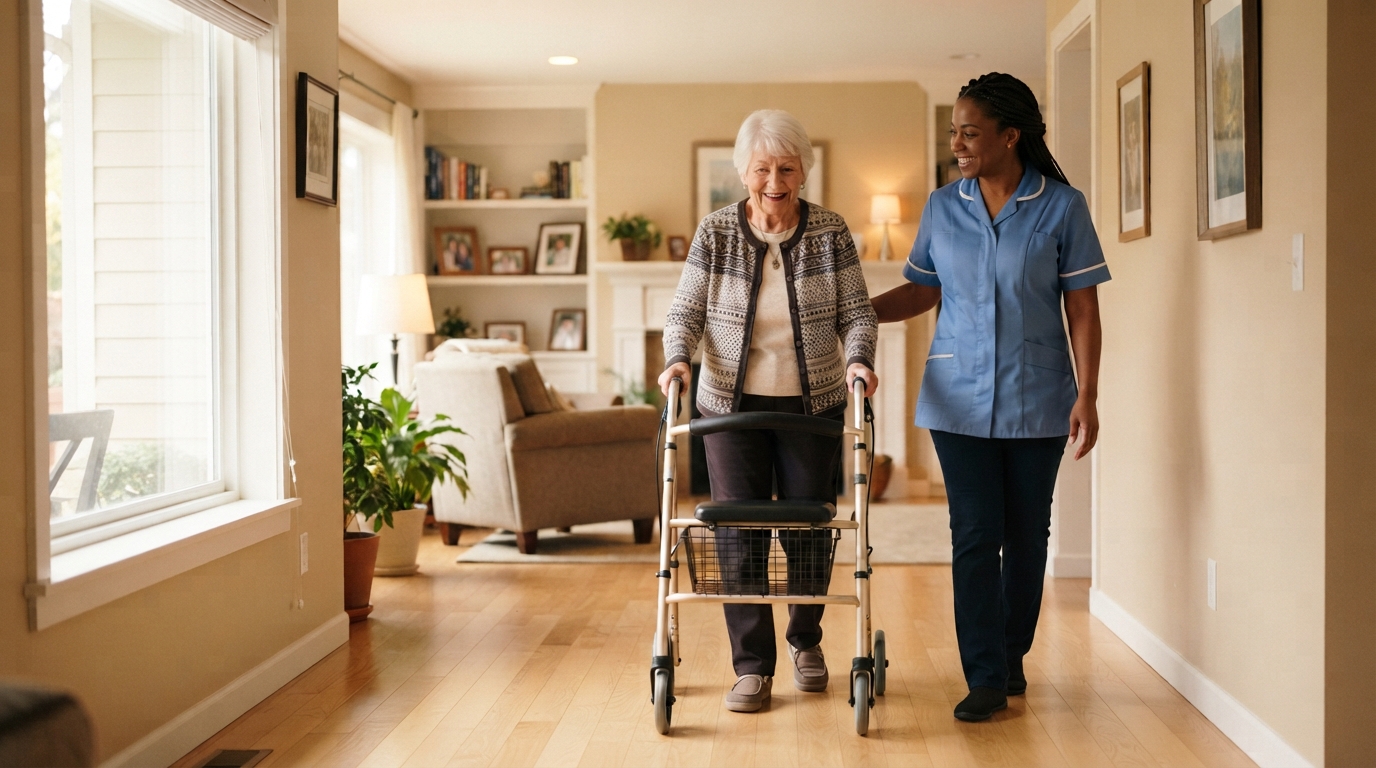
What Are Mobility Issues in Seniors?
Mobility issues refer to difficulties moving safely and comfortably. They can range from mild balance problems to significant challenges with walking, standing, transferring between surfaces, or using stairs.
Mobility changes can develop gradually with age or occur following an illness, injury, surgery, or hospitalization.
Common causes include:
- Arthritis, joint pain, or stiffness
- Muscle weakness and reduced balance
- Osteoporosis or injuries following a fall
- Parkinson’s disease and other neurological conditions
- Stroke or other conditions affecting movement
- Recovery following surgery or hospitalization
- Vision changes that make navigating the home more difficult
- General frailty or reduced endurance
Mobility limitations affect every person differently. Some seniors may walk independently but need help with bathing or stairs. Others may use a walker, wheelchair, or another mobility aid and require assistance with several daily activities. For more guidance, see What Can a PSW Help With at Home?.
The goal of home care is to understand what a person can safely do independently, identify where help is needed, and provide appropriate support without taking away more independence than necessary.
Signs an Aging Parent May Need Help With Mobility
Mobility challenges are not always easy to recognize at first. A parent may compensate for their limitations by moving more slowly, avoiding certain activities, or relying on furniture for support.
Watch for signs such as:
- Holding walls, counters, or furniture while walking
- Struggling to get up from a chair or out of bed
- Difficulty stepping into the bathtub or shower
- Avoiding stairs or staying on one floor of the home
- Becoming tired after walking short distances
- Having frequent near-falls or a history of falls
- Needing help with dressing, toileting, or personal hygiene
- Avoiding outings because walking has become difficult
- Having trouble carrying meals or household items while using a mobility aid
- Spending more time sitting or lying down because movement feels difficult
A noticeable change in mobility deserves attention, particularly if it develops suddenly. Sudden weakness, new difficulty walking, or an abrupt loss of balance may require urgent medical assessment rather than simply arranging additional home care.
If your parent is becoming less mobile, consider discussing the changes with their healthcare provider. An assessment may help identify treatable causes, determine whether a mobility aid is appropriate, and clarify what support is needed at home. For more guidance, see How to Know If an Aging Parent Shouldn't Live Alone.
How Can Home Care Help Seniors With Mobility Issues?
Home care can provide practical assistance with the daily activities that become harder when a senior has difficulty moving. The type and amount of support depend on the person's mobility, health, home environment, and individual care needs.
1. Assistance With Personal Care
Bathing, dressing, grooming, and toileting can be particularly difficult for someone with limited balance, strength, or range of motion.
A personal support worker (PSW) may help with activities such as:
- Getting dressed and undressed
- Washing and personal hygiene
- Bathing or showering, when the environment and care plan allow
- Using the toilet and maintaining personal hygiene
- Moving between a bed, chair, or other surfaces when the caregiver is trained and the transfer can be performed safely
Personal care assistance can help seniors maintain their hygiene and dignity while reducing the physical demands placed on family members.
2. Support With Walking and Moving Around the Home
Some seniors can walk independently but benefit from supervision or assistance when moving through the home. Others may need help with specific transitions, such as getting out of bed or moving from a chair to a wheelchair.
Depending on the care plan and the caregiver's training, support may include helping a senior navigate familiar spaces, use an appropriate mobility aid, or move between surfaces safely.
It is important to distinguish between routine assistance and transfers that require specialized training or equipment. A caregiver should not attempt a transfer they cannot perform safely, and a person who requires a mechanical lift or two-person assistance needs an appropriate care arrangement.
3. Help With Meals and Everyday Tasks
Mobility issues can make standing in the kitchen, carrying dishes, shopping, or completing household chores difficult.
A home caregiver may help with:
- Preparing simple meals and snacks
- Bringing food and drinks within easy reach
- Light housekeeping related to daily living
- Laundry and organizing frequently used items
- Picking up essential items within the scope of the arrangement
- Providing companionship during meals
These forms of support can make everyday life more manageable without requiring a senior to do tasks that may increase their risk of falling.
4. Support After a Fall, Illness, or Surgery
Mobility can decline following a fall, hospitalization, or surgical procedure. Even when a senior is medically ready to return home, they may need assistance with personal care and everyday activities while recovering. For more guidance, see Home Care After Hospital Discharge: What Families Need to Know.
Home care can help with non-clinical daily support during recovery, while nurses, physiotherapists, occupational therapists, and other healthcare professionals provide clinical care or rehabilitation as needed.
The care plan should reflect any movement restrictions, weight-bearing instructions, transfer precautions, or other directions provided by the healthcare team.
How Home Care Can Help Reduce Fall Risks
Falls are a major concern for seniors with mobility issues. A fall can lead to injuries, reduced confidence, and greater reluctance to move around. Even without an injury, fear of falling may cause a senior to become less active.
Home care can help address some everyday risks, but it cannot eliminate the possibility of a fall.
A caregiver may help by:
- Keeping frequently used items within easy reach
- Helping with personal care activities that involve standing, bending, or changing position
- Supporting safe movement according to the care plan
- Noticing obstacles or household routines that may create difficulties
- Encouraging the senior to use prescribed mobility aids
- Communicating changes in mobility or new safety concerns to the family
Families can also review the home environment. Loose rugs, cluttered walkways, poor lighting, slippery bathroom surfaces, and frequently used items stored on high shelves may create avoidable hazards.
Depending on the senior's needs, useful modifications may include grab bars, handrails, improved lighting, non-slip surfaces, or a shower chair. An occupational therapist can assess the home and recommend appropriate equipment or adaptations. For more guidance, see How to Help an Aging Parent Maintain Their Independence.
What Type of Home Care Is Best for a Senior With Mobility Issues?
The right arrangement depends on how mobility affects the person's daily life, whether they can safely be alone, and how much support family members can provide.
Occasional or Part-Time Home Care
A few visits per week may be sufficient for a senior who remains independent in most activities but needs help with bathing, dressing, meal preparation, or specific tasks.
This option can also supplement the support provided by family members.
Daily Home Care
Daily visits may be appropriate when a senior needs regular help with personal care, getting ready in the morning, preparing meals, or moving safely through certain activities.
The schedule can be built around the times when assistance is most useful.
Overnight Home Care
Some seniors need help getting to the bathroom during the night, repositioning in bed, or moving safely when they wake up. Others may be at risk because of confusion, weakness, or a need for closer supervision.
Overnight care may be worth considering when nighttime needs are frequent, although the appropriate arrangement depends on the level of assistance required and whether the caregiver needs to remain awake throughout the night.
Live-In or More Extensive Support
A senior with significant mobility limitations may need more extensive assistance throughout the day. Before arranging longer shifts or live-in support, families should assess the person's transfer needs, personal care requirements, supervision needs, and ability to remain safe between caregiver visits.
A caregiver's presence does not automatically mean continuous monitoring or that every type of physical assistance can be provided. The care arrangement must match the senior's actual needs. For more guidance, see How Many Hours of Home Care Does a Senior Need?.
Does a Senior With Mobility Issues Need a PSW, Nurse, or Physiotherapist?
Different professionals provide different types of support. Understanding their roles can help families arrange the right care.
- Personal support worker (PSW): Helps with personal care and everyday activities, including appropriate mobility assistance and transfers within their training and care plan.
- Nurse: Provides nursing assessment and clinical care when required, based on the person's health needs and the nurse's scope of practice.
- Physiotherapist: Assesses movement, strength, balance, and physical function, and develops an appropriate rehabilitation or exercise plan.
- Occupational therapist: Helps people manage daily activities and may recommend home modifications, equipment, or alternative techniques to improve safety and independence.
A senior may benefit from more than one type of professional. For example, a physiotherapist may work on strength and balance while a PSW helps with bathing, dressing, and everyday routines. For more guidance, see PSW vs. Nurse: What’s the Difference?.
Home care is not a substitute for medical assessment or rehabilitation when these services are needed. If your parent has a new or worsening mobility problem, discuss it with their healthcare provider.
How to Make a Home Safer for Someone With Mobility Issues
Caregiver support works best when the home environment is also suitable for the person's abilities.
Consider reviewing these areas:
Entryways and hallways
- Keep pathways clear of clutter and loose objects.
- Ensure entrances and hallways are well lit.
- Arrange frequently used items where they can be reached without climbing or stretching.
Bathrooms
- Consider professionally installed grab bars where appropriate.
- Use non-slip surfaces and suitable bathing equipment.
- Assess whether the senior can step into the shower or bathtub safely.
Bedrooms
- Make sure there is a clear route between the bed and the bathroom.
- Keep a phone, lighting controls, and frequently used items within reach.
- Ask a healthcare professional whether the bed height or other equipment should be adjusted.
Stairs and living areas
- Check that handrails are secure and lighting is adequate.
- Remove or secure loose rugs and trailing electrical cords.
- Arrange seating so the senior does not have to walk unnecessarily long distances.
Do not assume that a piece of equipment is suitable simply because it is marketed for seniors. Walkers, wheelchairs, transfer aids, and bathroom equipment should be selected and adjusted for the person's needs. Seek professional advice when there is uncertainty about safe use.
How to Choose a Home Caregiver for a Senior With Mobility Issues
When mobility assistance is part of the care plan, selecting a caregiver involves more than finding someone who is friendly and available.
Consider the following:
Experience With Similar Mobility Needs
Ask whether the caregiver has experience supporting seniors who use walkers, wheelchairs, or other mobility aids, or who need assistance with bathing, dressing, and transfers.
The experience should match your parent's actual needs. Someone who is comfortable providing companionship may not have the training required for a complex transfer.
Training and Safety
Confirm relevant qualifications and ask about training in safe mobility assistance, fall prevention, and the use of any equipment involved in care.
If your parent requires a mechanical lift, two-person transfers, or specialized equipment, verify that the proposed care arrangement can safely meet those requirements.
Communication and Personal Compatibility
A senior may feel vulnerable when accepting help with personal care or movement. A caregiver who communicates clearly, respects preferences, and allows the person to participate as much as possible can make the experience more comfortable.
Whenever possible, involve your parent in choosing the caregiver and discussing how they prefer to receive assistance.
Reliability and Scheduling
Think about when help is most needed. Morning visits may be important if getting dressed and showering are difficult, while evening support may be useful if fatigue makes moving around more challenging later in the day.
Be clear about the schedule, expected duties, and what should happen if your parent's needs change. For more guidance, see How to Choose the Right PSW for Your Parent.
Can Families Combine Publicly Funded Home Care With Private Care?
In Ontario, eligible seniors may receive publicly funded home care through Ontario Health atHome. The type and amount of support depend on an assessment of the person's needs and the services available through the relevant program. For more guidance, see Does OHIP Cover Home Care? What Ontario Families Need to Know.
Depending on the assessment, services may include personal support, nursing, rehabilitation, or other professional services. Families should not assume that publicly funded care will provide every visit or task they would prefer.
Private home care may help fill gaps when a family needs additional hours, a different schedule, or more support with everyday activities. Some families use a combination of publicly funded services, private care, and help from relatives.
The best approach depends on the senior's needs, eligibility, budget, and the availability of appropriate services.
For families considering private support, it can also be helpful to understand the differences between hiring a caregiver directly, working with an agency, and using a caregiver platform. For more guidance, see Private PSW vs. Home Care Agency: What’s the Difference?.
How Vidal Home Care Can Help
Finding appropriate support for a parent with mobility issues can take time. Families need to consider the person's physical needs, caregiver experience, schedule, communication preferences, and budget.
Vidal Home Care is a platform that helps families connect with PSWs while offering more choice than a traditional agency and more support than arranging care entirely on their own.
Families can review caregiver profiles and consider factors such as experience, qualifications, areas of care, availability, location, and communication style. Vidal caregivers go through a structured screening process that includes identity and certification verification, background screening, a video assessment, and a knowledge and standards test.
For a senior with mobility challenges, families should look for a caregiver whose experience and training fit the specific assistance required. Be clear about whether your parent needs help with personal care, routine mobility support, or particular transfers, and confirm that the caregiver and care arrangement are suitable before care begins.
Vidal's Care Coordination support can help families navigate the process and communicate care needs. As those needs change, families should review whether the current arrangement remains appropriate.
FAQ
Frequently asked questions
The Bottom Line
Mobility issues can make everyday activities more difficult, but they do not automatically mean a senior must leave their home or give up their independence.
With the right combination of home care, suitable equipment, home modifications, and professional guidance, many seniors can continue living at home with appropriate support.
The most important step is to identify what your parent can do safely, where assistance is needed, and whether the caregiver's experience and training match those needs. A thoughtful care plan can help your loved one maintain dignity and independence while giving the family a clearer path forward.
Looking for support with mobility at home?
Find a Caregiver whose experience fits your loved one's daily care needs.
Free, no-obligation conversation.